Recycle
Distinguish suitable shells from rubbish and learn why collected material needs preparation.
PLAY · EXPLORE · RESTORE
Explore oyster and mussel reef restoration with a free browser game, a short lesson plan and a printable classroom activity.
PLAY SHELLFISH REEF REVIVAL →OPEN TEACHER ACTIVITY →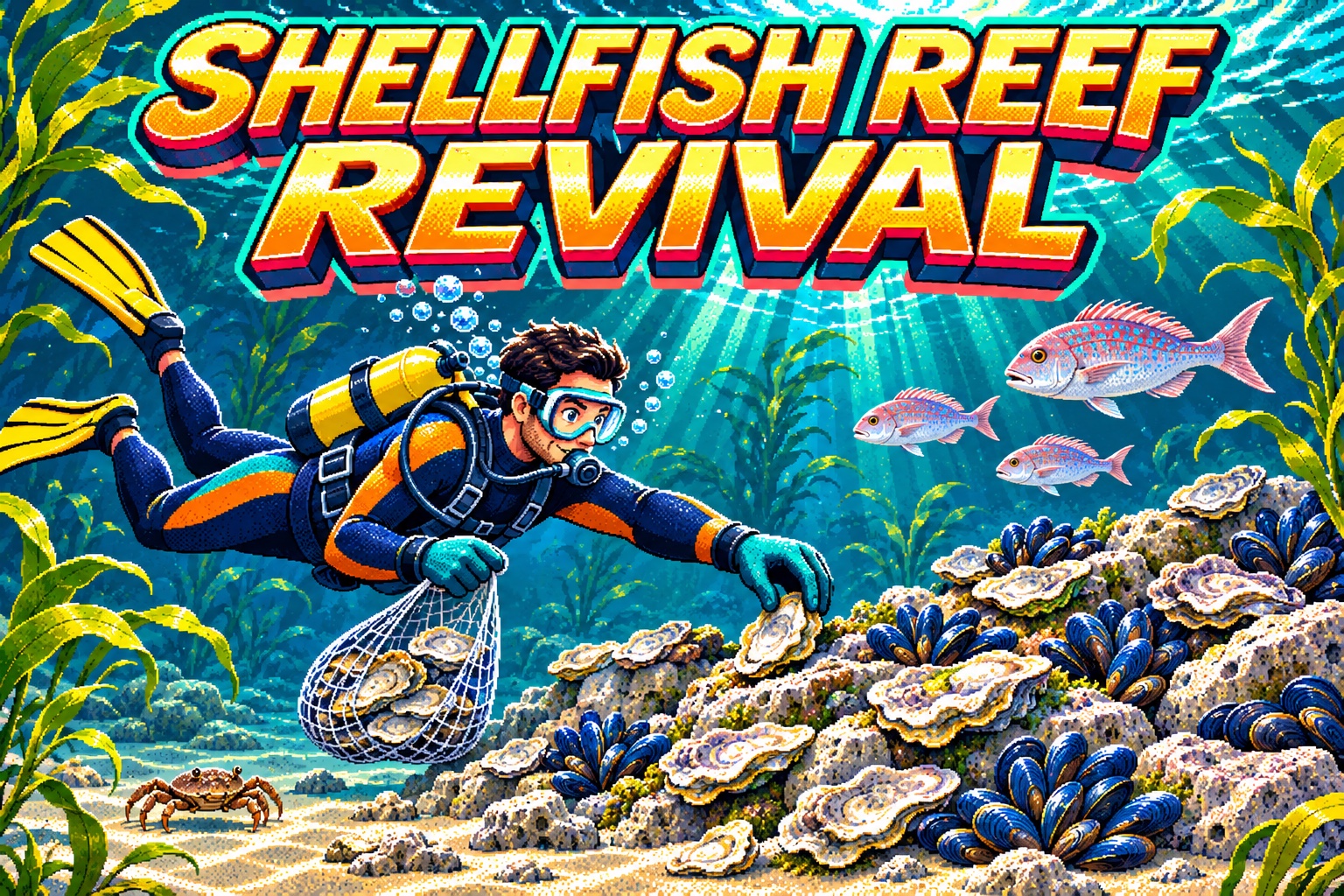
Suggested learners: ages 9–14, with adult support as needed · Lesson: 30–40 minutes · Cost: free · Access: browser, no account required. Suggested teaching level; no formal curriculum alignment claimed.
A shellfish reef is living habitat built by reef-forming shellfish such as oysters and mussels. Their shells create surfaces and spaces used by other animals. Feeding shellfish filter particles from water, while the reef provides shelter and food.
Australia has lost extensive shellfish habitat through pressures including harvesting, pollution and disease. Restoration aims to help native reef communities recover. Learn more from The Nature Conservancy’s habitat overview and restoration guidelines.
Shellfish Reef Revival takes players from restaurant shell recycling to reef construction and wildlife surveys. Sort materials, place reef foundations on sand, protect seagrass and look for marine life as the reef develops.
Distinguish suitable shells from rubbish and learn why collected material needs preparation.
Make placement decisions and connect reef foundations with living native oysters and mussels.
Survey returning wildlife and discuss what repeat observations could reveal.
Choose Normal or Kids / Easy mode. The game compresses months and years into seconds. Empty recycled shells provide material; they are different from the living shellfish that grow and reproduce. Real projects follow local approvals, biosecurity requirements and site-specific plans.
START THE REEF RESTORATION GAME →Yes. Shellfish Reef Revival plays in a web browser without an account. The activity sheet is also free to print.
Yes. The lesson uses the game, discussion and a paper planning task. It needs no shell collecting or field sampling.
No. Oyster and mussel reefs are built by shellfish; coral reefs are built by corals. Both can provide complex habitat, but their organisms and restoration methods differ.
No. Game completion is a learning milestone. Real recovery needs repeated monitoring and evidence against project goals.
Explore sponge fragmentation and habitat building, underwater habitat deployment, kelp forest recovery and eDNA sampling and biodiversity monitoring. Each explores a different part of environmental restoration and learning.
Sources checked 3 November 2026. This resource has not been independently reviewed by a shellfish restoration scientist.